The Jevons Paradox[1] occurs when an increase in efficiency makes a resource cheaper and easier to use, which causes demand increase so much that we end up using more of the resource than we did before.
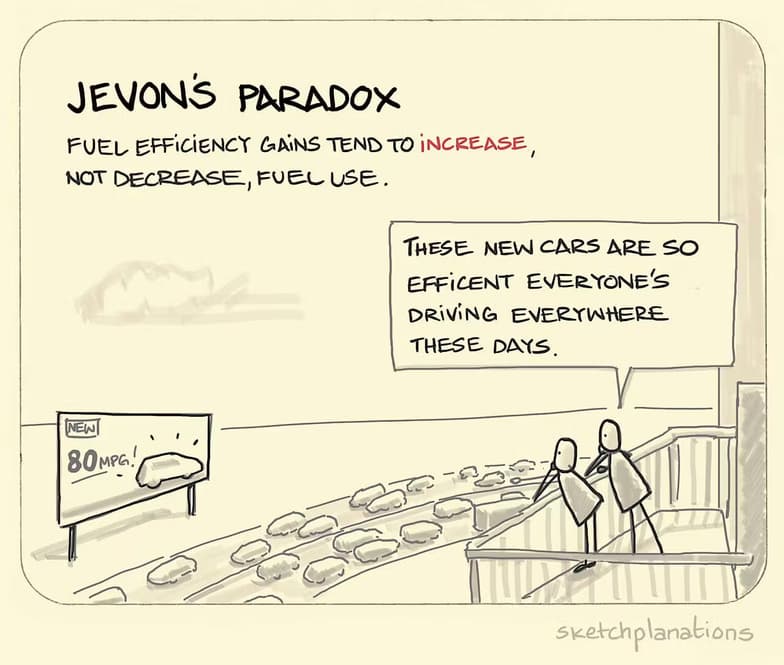 Source: Sketchplanations
Example:
- You get a new car that gets 20 km/liter instead of 10, cutting your cost-per-trip in half.
- Since it's cheaper, you drive way more, taking extra trips and driving instead of walking.
- Because you're driving so much more, you actually end up burning more total gas.